
Operational responsibility without uncontrolled authority
Omnishi enables organizations to run autonomous AI inside daily operations while controlling what each operating context can see, do, change, and spend.
Governance is built into the platform executing the work. Permissions, restrictions, Knowledge, activity records, model controls, automatic pauses, human escalation, and a kill switch apply directly to Omnishi Playbooks, assistants, and bots.
Companies can move beyond pilots without separating AI execution from the controls needed to operate it.
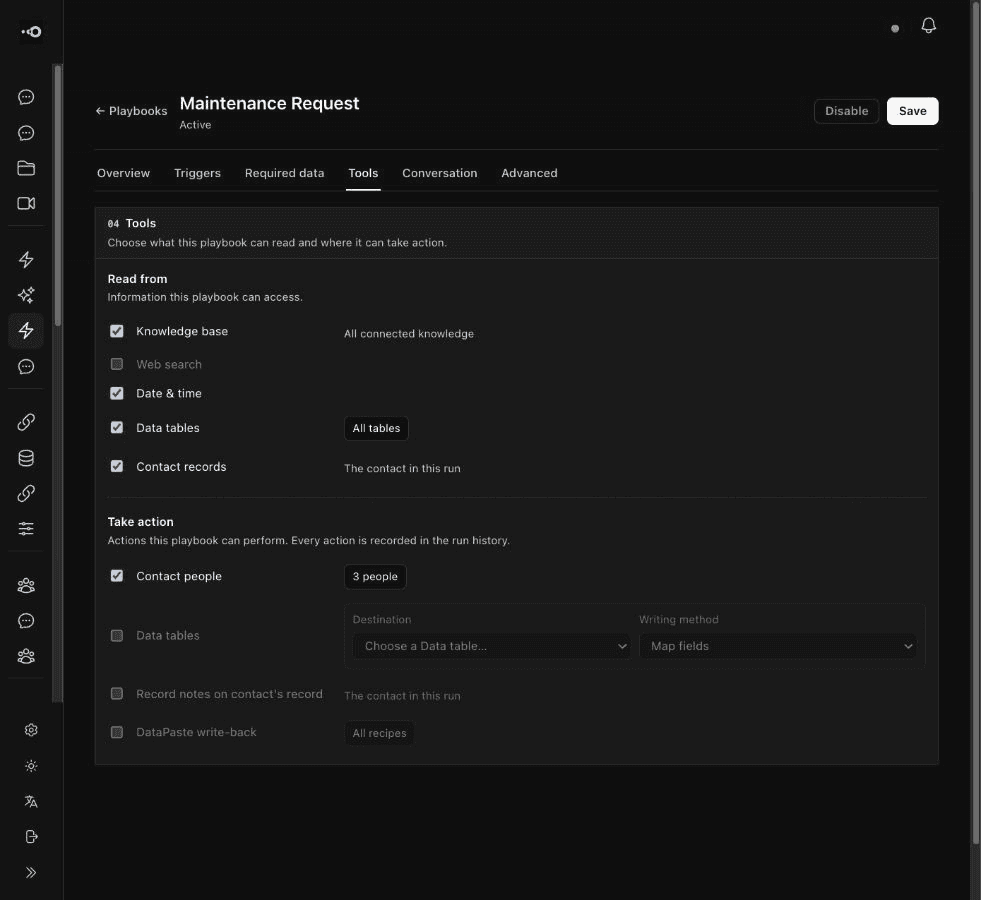
Scope access to the operation
Different Omnishi surfaces can have different access. A customer bot can be limited to that customer’s records and granted documents. An internal assistant can operate within the user’s permission scope. A finance Playbook can read designated sources and write to an approved system while remaining blocked from unrelated data.
Information outside the granted scope is not available to that operating context. This is stronger than merely instructing a model not to use sensitive information.
Restrict actions independently
Each operation can receive the minimum authority needed for its job.
- Sources an AI may read
- Systems or records it may write
- Whether it may contact customers directly
- Spending or transaction limits
- Approved tools, features, and models
- Actions that require human approval
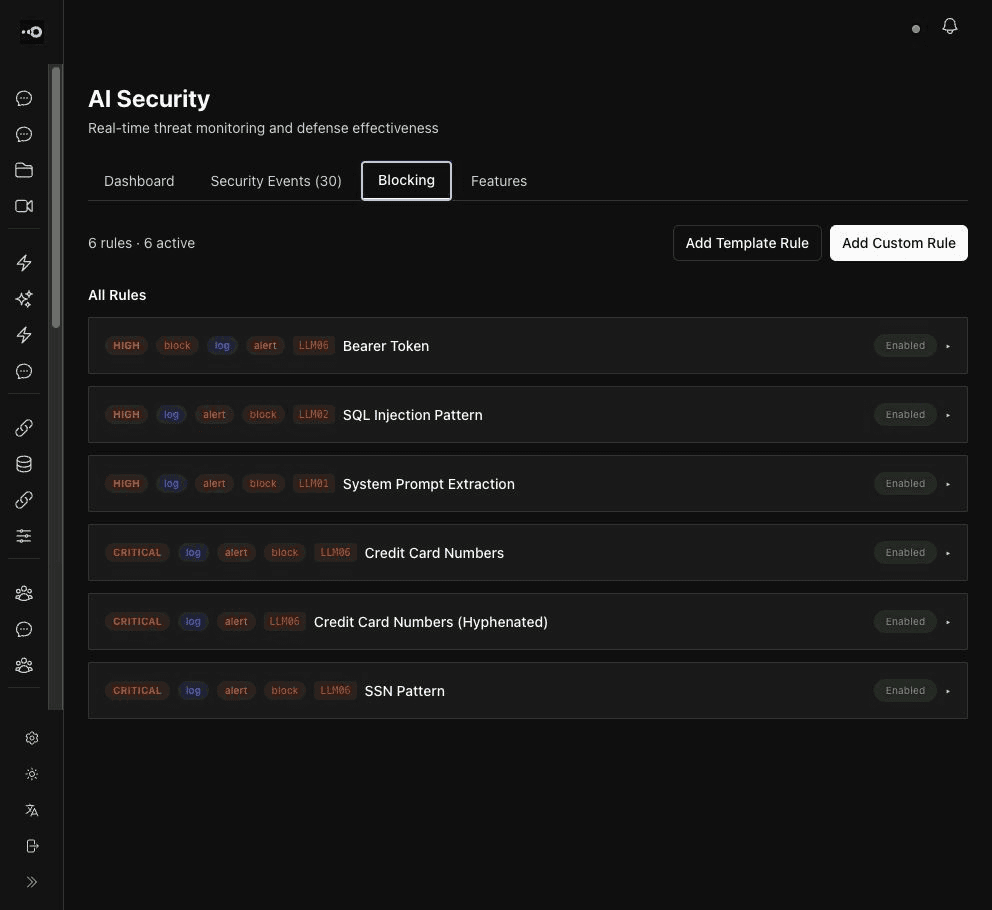
Preserve an operational activity record
Omnishi records activity including calls, reads, writes, messages, costs, and failures. Actions can be associated with the Knowledge and evidence used at the time.
Operators can review what happened and ask a Playbook why it acted. Autonomous work becomes supervisable as business activity, not only observable as model telemetry.
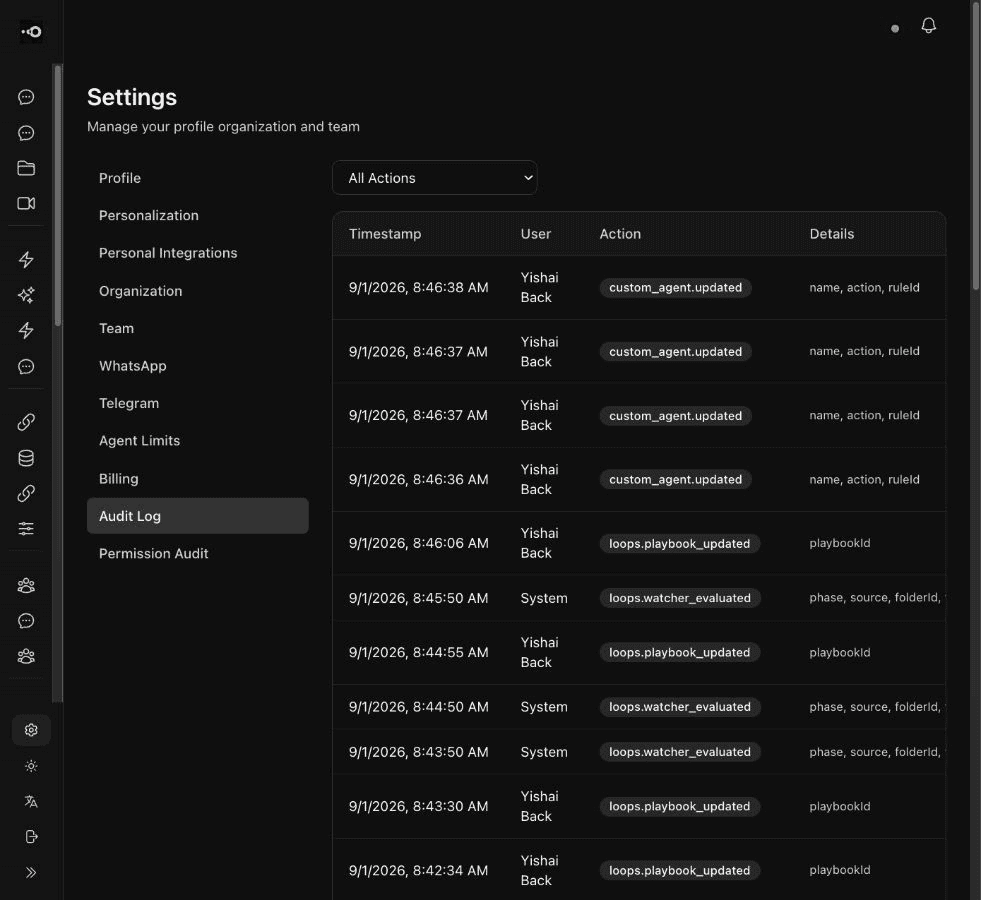
Route exceptions to accountable humans
A Playbook can pause when a request exceeds its authority, information is missing, sources conflict, a system fails, behavior leaves expected limits, or a decision is reserved for a person.
The human receives the case history, evidence, prior actions, and required decision. After the response, the operation can continue from its existing state.
Build brakes into execution
Omnishi provides controls including per-agent restrictions, model allowlists, a kill switch, and automatic pauses when something behaves unexpectedly.
The safe response to uncertainty can be “pause and ask,” rather than “continue and hope.”
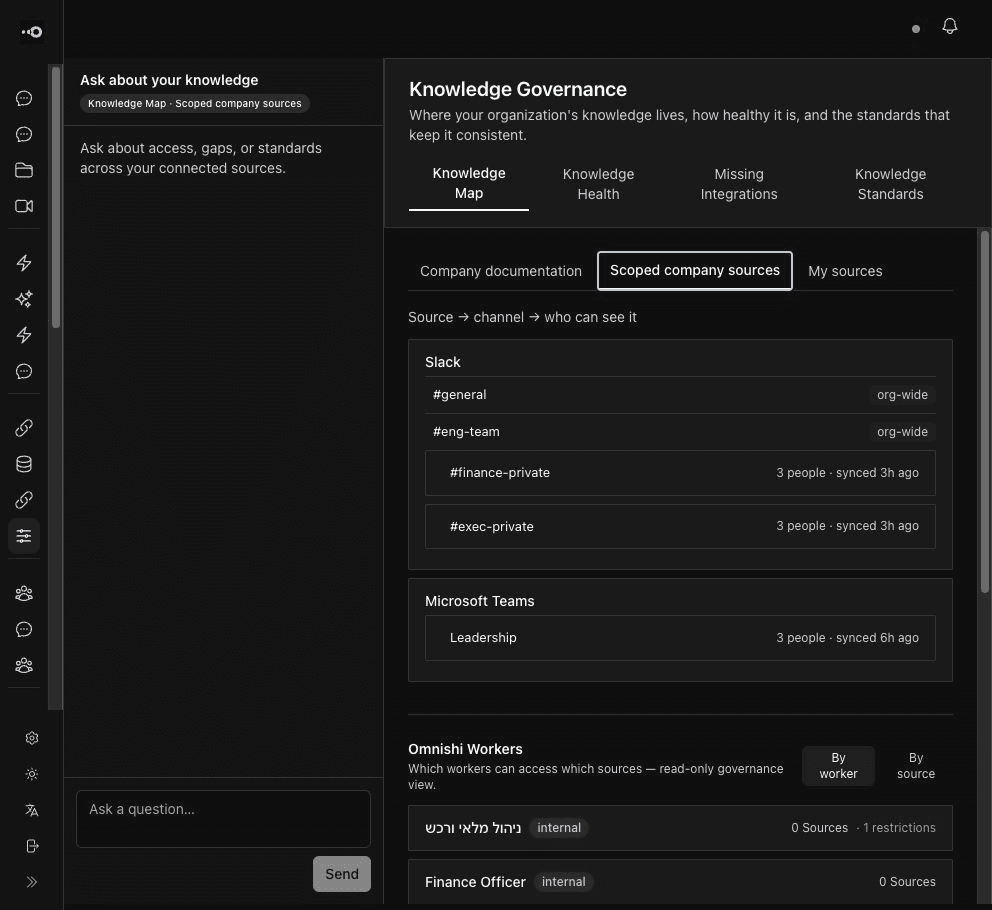
Govern the knowledge behind the work
Omnishi Knowledge Health identifies missing, outdated, thin, or conflicting documentation revealed through actual use and helps teams address those gaps. Knowledge Governance supports permission boundaries across sources so organizational knowledge does not cross data-access lines automatically.
Operational example
A governed finance operation
A finance Playbook can receive access only to the expense and vendor records required for its task. It evaluates an incoming invoice, compares the amount with historical data, checks for a corresponding purchase order, and performs the allowed next step.
It cannot access unrelated data or act outside its configured authority. A transaction above its threshold pauses for approval. The reviewer receives the invoice, relevant history, policy, reasoning, and activity record together. The final decision and subsequent action remain part of the same operation.
Execution and control in the same product
A governance product can inventory or monitor AI deployed elsewhere. An observability platform can trace model and agent behavior.
Omnishi fulfills a different end-to-end goal: deploy and run the governed AI operation itself. Its controls exist because Omnishi is carrying out the business work.